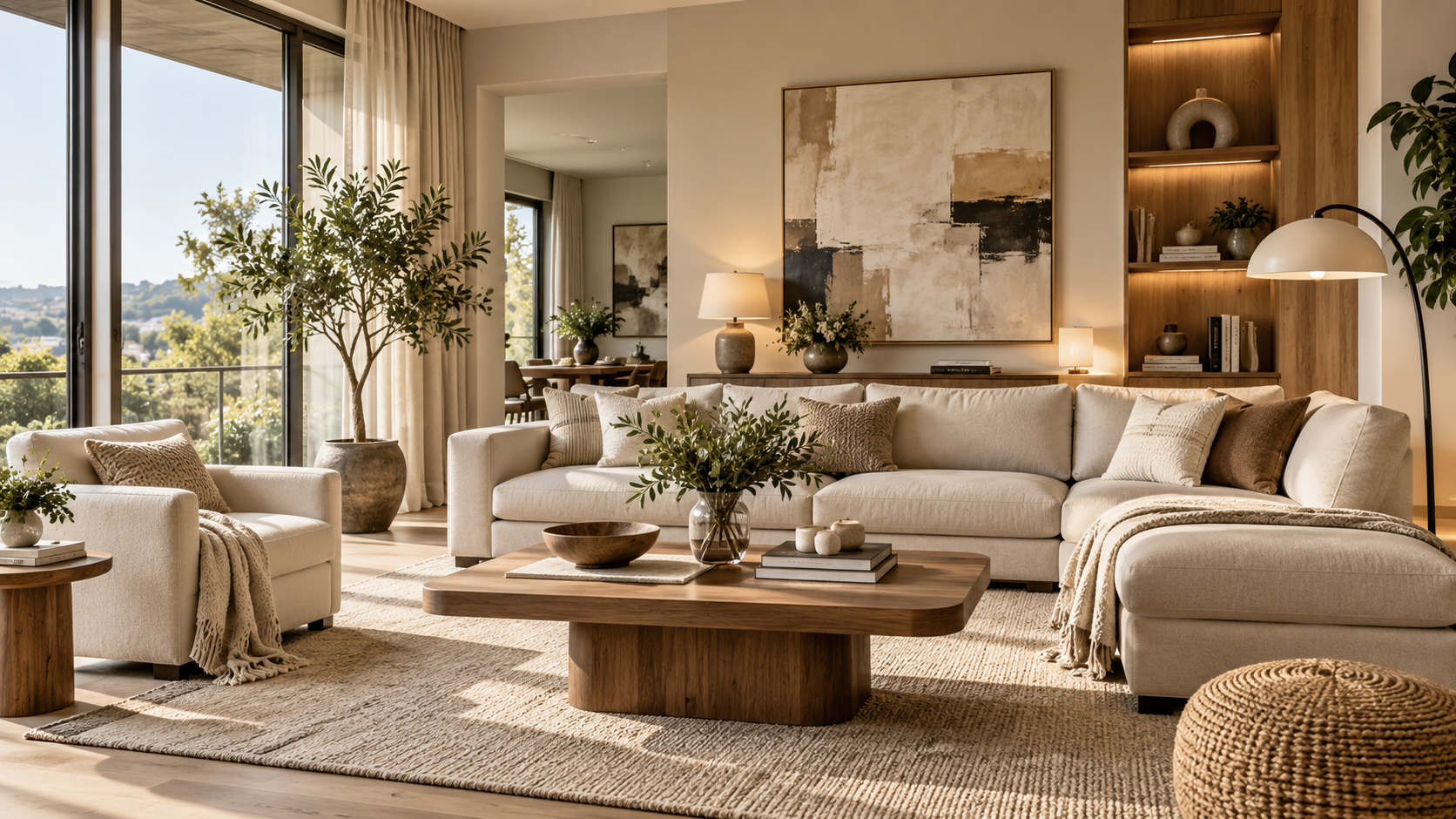
13 Modern Home Decor Ideas That Make Any Space Feel More Refined
Modern home decor does not have to mean stark white walls, expensive designer furniture, or a room that feels like a showroom.
The most successful modern spaces usually have something simpler in common: everything feels intentional. The colors work together, furniture has enough breathing room, lighting creates atmosphere, and decorative pieces have a reason for being there.
If your home feels a little dated, cluttered, or visually disconnected, you do not necessarily need a complete makeover. A few carefully chosen changes can shift the entire feel of a room.
Here are 13 modern home decor ideas worth trying.
Home DecorBy ESSA JEE Journal·September 6, 2026·Updated September 6, 2026·6 min read
Home Decor
1. Start With a Calm Neutral Base
A neutral foundation makes modern decorating much easier.
Think warm white, cream, beige, taupe, soft gray, or greige rather than relying on several competing colors. A restrained base allows furniture, artwork, plants, and textured accessories to stand out without making the room feel busy.
You do not need an entirely neutral room, either. Use the neutral palette as the foundation and introduce personality through smaller accents.
Try this: Keep your largest surfaces—walls, rugs, sofas, or curtains—in related neutral tones, then add one or two stronger accent colors.
2. Layer Different Types of Lighting
Lighting can change a room more dramatically than many decorative purchases.
Instead of depending entirely on one ceiling fixture, combine several light sources. A floor lamp can brighten a dark corner, a table lamp can make a seating area feel more intimate, and wall lighting can add visual interest.
Modern interiors often look better when the lighting is layered rather than uniformly bright.
Try this: Aim for a combination of overhead, ambient, and task lighting.
3. Choose One Statement Piece
Modern rooms do not need dozens of decorative objects.
Instead, choose one piece that deserves attention: an oversized artwork, sculptural chair, distinctive coffee table, large mirror, or dramatic light fixture.
Giving one element visual priority creates a cleaner and more sophisticated composition.
Try this: Before buying another small accessory, ask whether one larger piece could make a stronger statement.
4. Mix Warm Wood With Clean Modern Lines
A completely sleek room can sometimes feel cold. Natural wood is an easy way to soften modern furniture and architectural lines.
A wood coffee table, shelving unit, sideboard, picture frame, or dining table can introduce warmth without taking the room away from its modern character.
Light and medium wood tones work particularly well with neutral palettes.
The key: Use wood as a repeated material rather than introducing several unrelated finishes.
5. Use Large-Scale Artwork
One large artwork can often do more for a modern room than a collection of tiny decorative pieces.
Large artwork creates a visual anchor and gives an otherwise simple wall a deliberate focal point.
Abstract designs, photography, line art, and restrained graphic pieces can all work depending on the rest of the room.
Try this: Hang artwork so it relates visually to the furniture beneath it rather than leaving a large disconnected gap.
6. Add Texture So Minimalism Doesn't Feel Cold
Modern does not have to mean smooth and sterile.
Combine different textures—linen, cotton, wool, wood, glass, ceramics, metal, and woven materials—to create depth while keeping the color palette controlled.
A textured throw over a simple sofa or a woven basket beside a clean-lined cabinet can make a noticeable difference.
Simple rule: When using fewer colors, let texture provide the visual variety.
7. Create a More Intentional Entryway
The entryway sets the tone for the rest of the home.
A modern entry does not need much. A slim console, simple mirror, small lamp, tray for everyday items, and one decorative object can be enough.
The goal is to give essentials a designated place while keeping the entrance visually clear.
If space is limited, use a wall-mounted shelf instead of a full console.
8. Replace Visible Clutter With Smart Storage
One of the fastest ways to make a room feel more modern is to reduce visual noise.
That does not mean getting rid of everything you own. It means deciding which things deserve to remain visible.
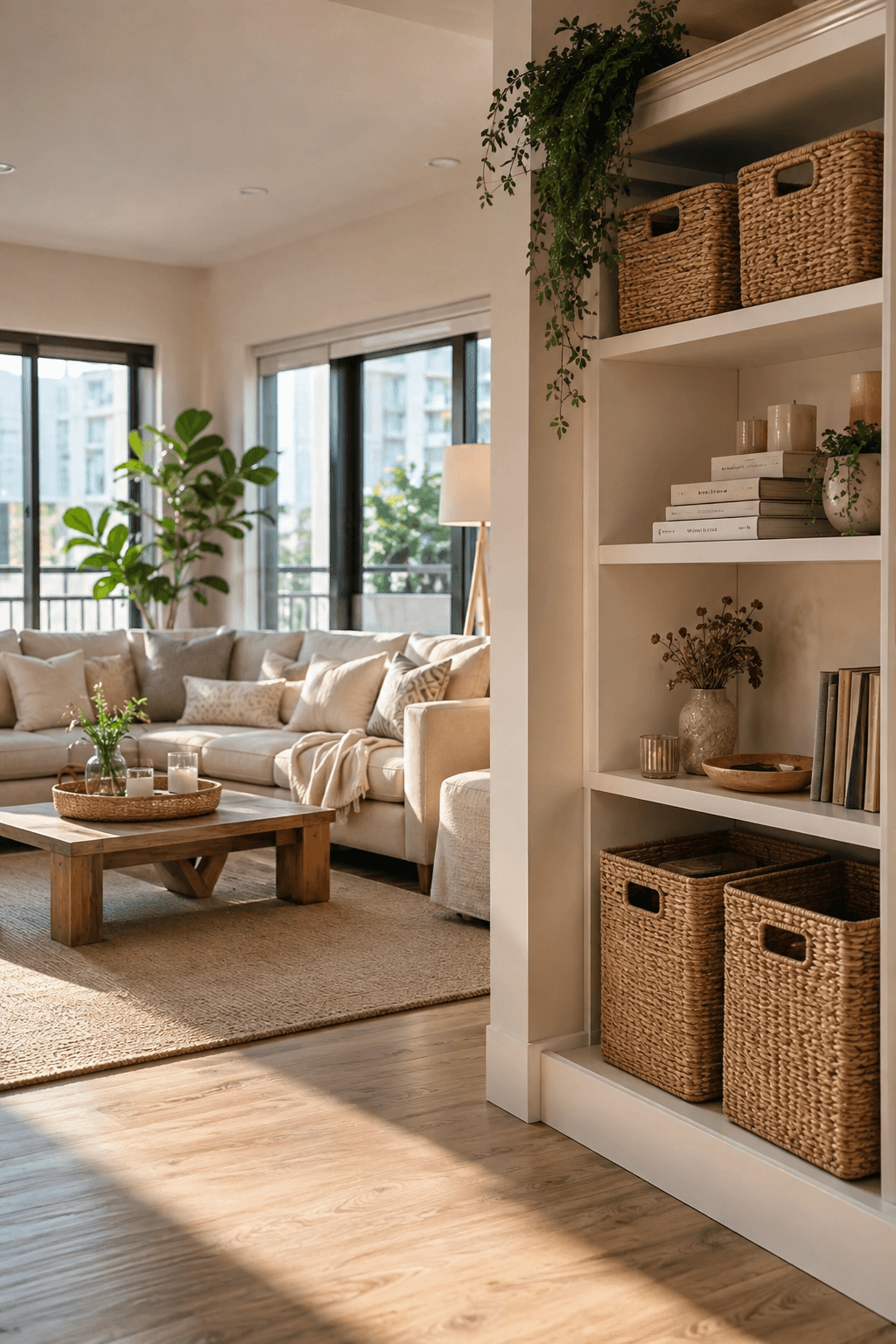
Use baskets, closed cabinets, storage ottomans, drawers, and attractive containers for everyday items that tend to accumulate.
Try this: Keep frequently used items accessible but visually contained.
9. Bring in Plants With Sculptural Shapes
Plants add color and organic form to modern interiors.
Instead of filling every empty corner with small plants, consider one larger plant with a distinctive silhouette. A tall plant beside a sofa or cabinet can balance a room vertically.
For people who prefer lower-maintenance options, choose varieties appropriate for the available light or use a well-made artificial plant.
10. Upgrade Your Soft Furnishings
You can change the character of a room without replacing its major furniture.
Curtains, cushions, rugs, throws, and bedding occupy a significant amount of visual space. Updating them can make older furniture feel much more current.
For a modern look, consider restrained patterns, tactile fabrics, simple shapes, and colors that relate to the room's existing palette.
A rug can be especially useful because it visually connects separate pieces of furniture.
11. Use Mirrors Strategically
A mirror can add depth and help reflect available light.
Instead of placing several small mirrors around the room, consider one appropriately scaled mirror in a location where it reflects something visually pleasing.
A mirror facing a window can help bounce daylight into the room, while a large mirror in a smaller space can create a stronger sense of openness.
12. Repeat One Accent Color
A modern color scheme becomes more cohesive when an accent color appears in several places.
For example, muted olive could appear in a cushion, artwork detail, and plant pot. Terracotta might appear in a ceramic accessory and throw. Deep charcoal could connect lighting, picture frames, and furniture details.
The repetition makes the room feel designed rather than randomly decorated.
Try this: Choose one accent color and repeat it two or three times rather than introducing several unrelated colors.
13. Leave Some Space Empty
One of the most overlooked modern decorating techniques is knowing when to stop.
Empty space allows furniture and decorative pieces to breathe. It also gives the eye somewhere to rest.
If every shelf, wall, and tabletop is filled, even beautiful objects can become visual clutter.
Before adding another decoration, remove one thing and see whether the room actually looks better.
How to Make Modern Decor Feel Warm
If you like modern design but dislike the cold, overly minimal look, concentrate on warmth rather than more decoration.
Use natural wood, soft textiles, warm lighting, rounded forms, plants, handmade-looking ceramics, and subtle variations in neutral colors.
The balance is important. Too many hard surfaces can make a room feel stark, while too many decorative objects can weaken the clean character that makes modern design appealing in the first place.
A useful formula is:
Clean lines + warm materials + soft lighting + controlled decoration = a more comfortable modern room.
The Easiest Modern Update to Start With
You do not need to tackle all 13 ideas at once.
Walk into the room you want to update and identify what bothers you most. If it feels cluttered, start with storage. If it feels dark, address lighting. If it feels dated, consider artwork and textiles. If it feels cold, introduce wood and softer textures.
That approach is usually more effective than buying a collection of new decorations and hoping they work together.
Modern style is less about having more and more about making better choices with what you already have.
Explore the Collection
Discover the fabrics and pieces behind this journal entry.
A well-organized home isn't about hiding everything away. It's about making everyday things easier to find, use, and put back. These simple organization ideas can help you create more space without turning your home into a storage project.